Reliability Engineer
Name the fault. Show the standard.
A finding carries a fault name, the frequency it came from, and an ISO zone.
- Faultnamed on the finding
- Frequencymarked on the spectrum
- ZoneISO 20816, on the chart

SpectrumPeaks against the bearingsDrive end and non-drive end
The evidence on one asset
The spectrum, the zone, and how far from normal.
Health is the score. The anomaly joins it after the baseline locks.
The spectrum, marked.
- BPFOOuter race
- BPFIInner race
- BSFBall spin
- FTFCage
- 1PeaksMarked on X, Y, and Z.
- 2BearingsDrive end and non-drive end, each with its frequencies.
- 3MatchA peak that lands on a bearing frequency is the named fault.
- 4SensorThe point the reading came from.
If the bearing is not in the catalog, those frequencies are marked approximate. The numbers are that machine’s.

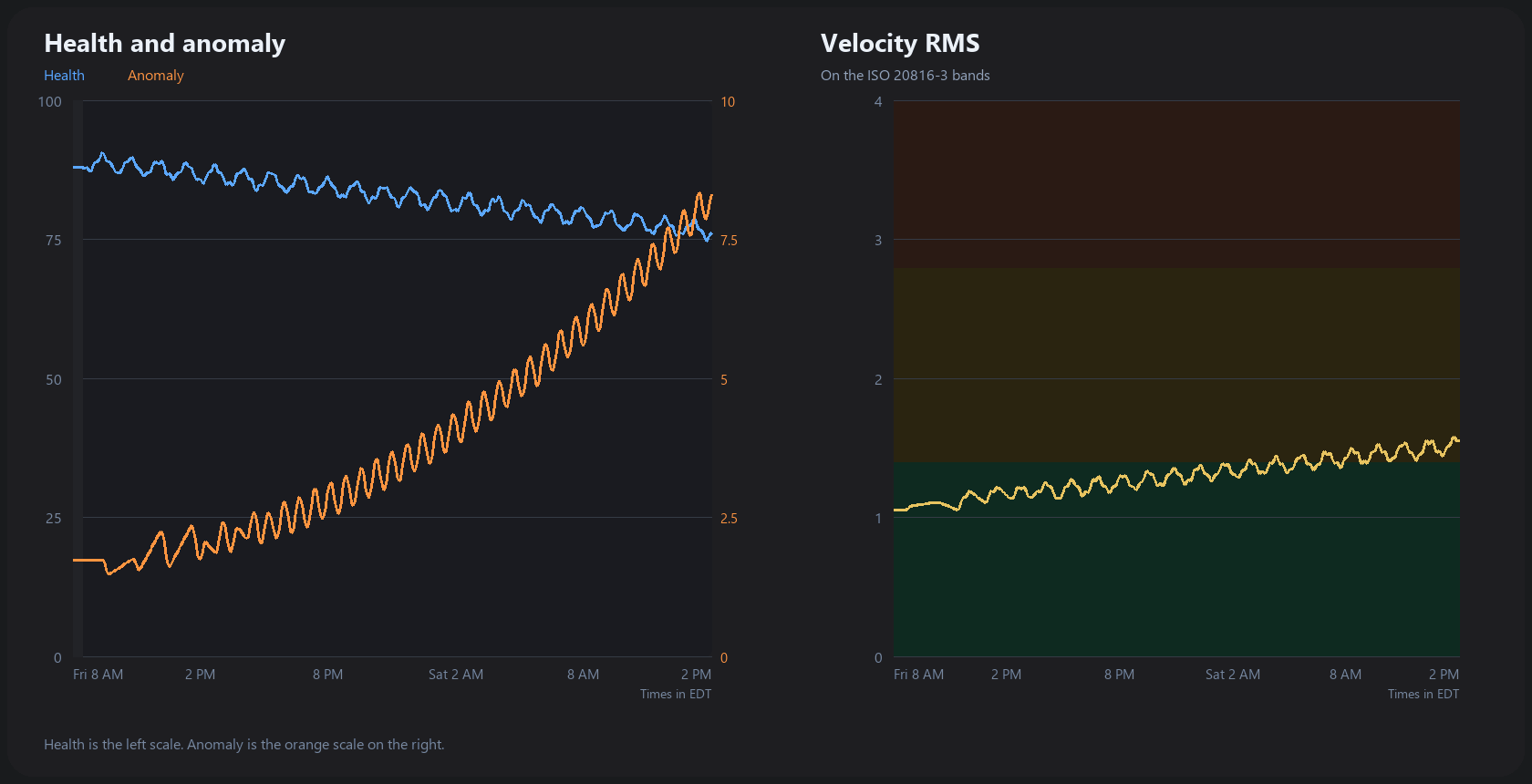
Health, anomaly, and the bands.
- Healththe score
- Anomalyafter the baseline
- Zoneon the velocity chart
Velocity sits on the ISO bands. The zone is read from the worst axis.
What you can stand up in a review
The machine.
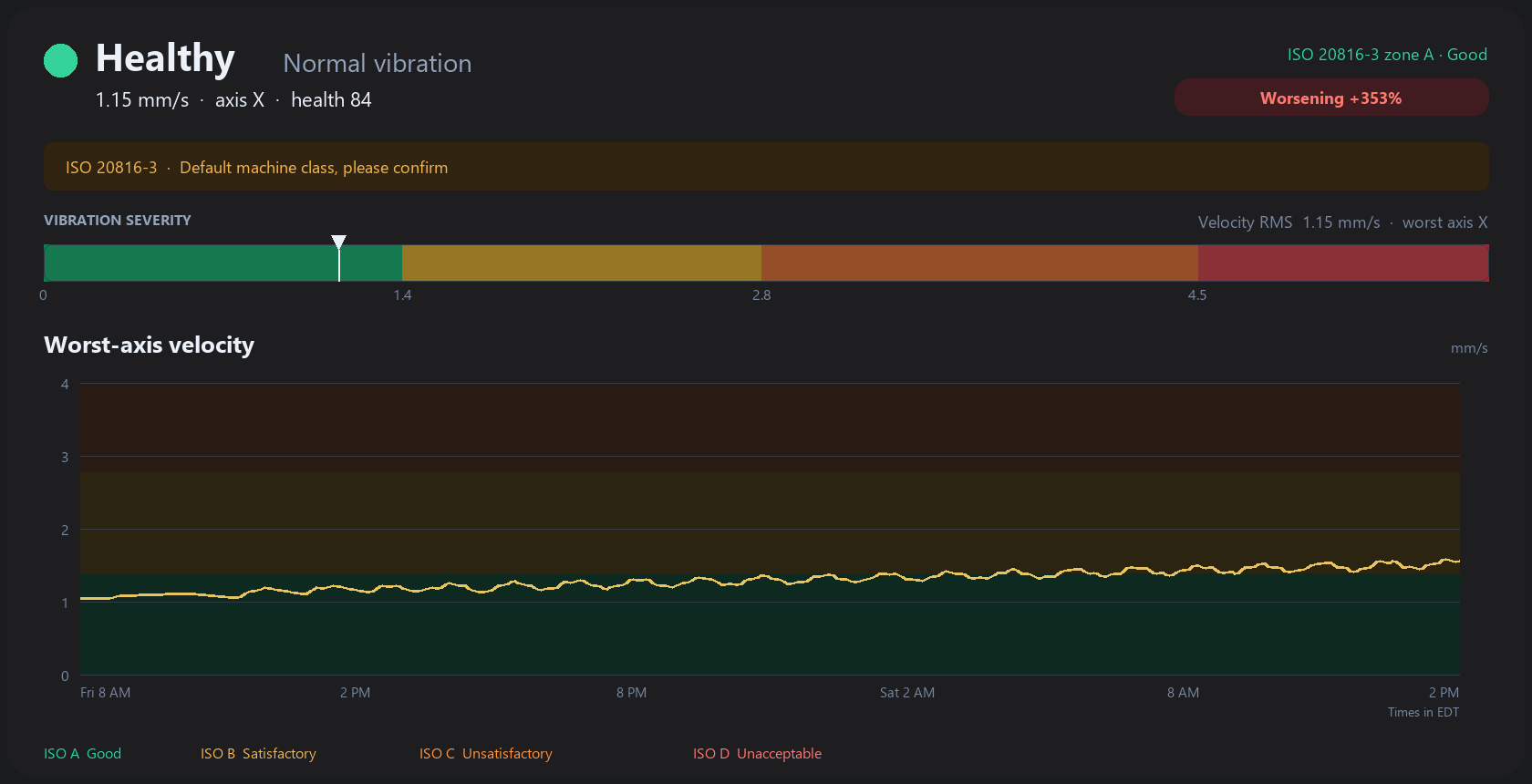
- The zone is on the machine.A, B, C, or D, from the worst-axis velocity.
- Health is the score.It follows that velocity. It is not a second badge pasted beside the zone.
- Normal waits for a baseline.The anomaly joins the score after the baseline locks on this machine’s duty.
- Confirm the class.The limits follow the machine class. Until that is confirmed, do not treat them as final.
- The spectrum names the mode.A peak on a bearing frequency is the fault you can take to the meeting.
For the review
The zone, named.
Open on the fault. The rest of the machine can wait.
- AGood. Leave it running.
- BSatisfactory. Keep watching.
- CUnsatisfactory. Plan the repair.
- DUnacceptable. Act on it.
- ClassConfirm it before the limits are final.
- A named mode.The finding carries the fault, and the frequency it came from.
- The zone, on the chart.Velocity sits on A, B, C, and D. The worst axis sets it.
- This machine’s normal.The baseline is learned on its own duty, then the anomaly counts.